The project
Neety helps B2B sales teams know which companies to sell to, when to do it and what action to take. More than 200 salespeople use it at more than 50 industrial companies, such as Ojmar, Telpark and Fagor Automation.
We worked with Unai and his team on the redesign of their website. The previous one was on Webflow, and maintaining it was one of their biggest problems: the site could not keep pace with the product.
We started with the design, in Figma, and then they asked us to build the site with AI: with Ship Studio, each screen went to Claude, which turned it into code. The result: 40 pages in two languages, with the content in the Sanity CMS.
It launched on 24 September, at Neety Forward. Since then, Unai and his team have rebuilt the demo page and published 30 articles and 26 academy resources on their own.

“Close, human and genuinely able to understand your project. More than a supplier, they are part of your team.”
Unai ArambarriFounder and CEO, Neety
From Figma to the site
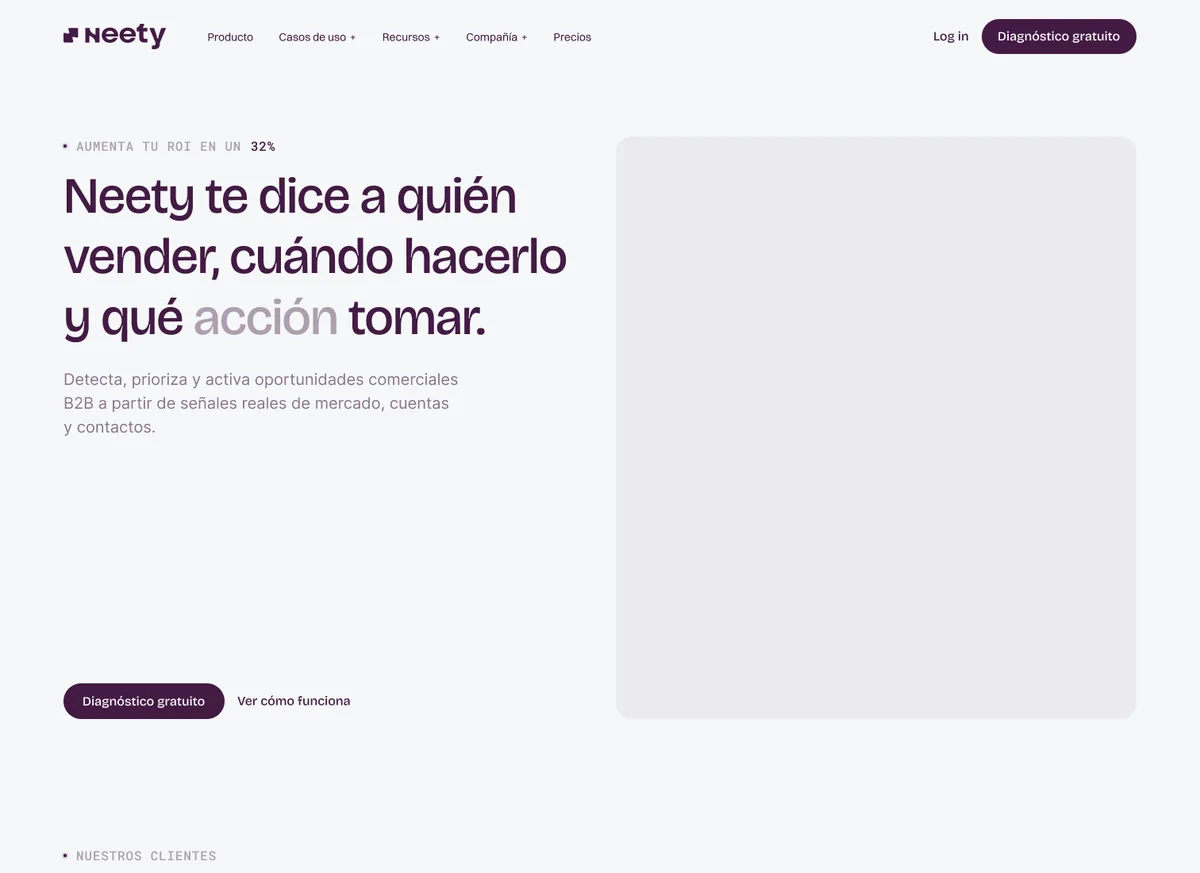
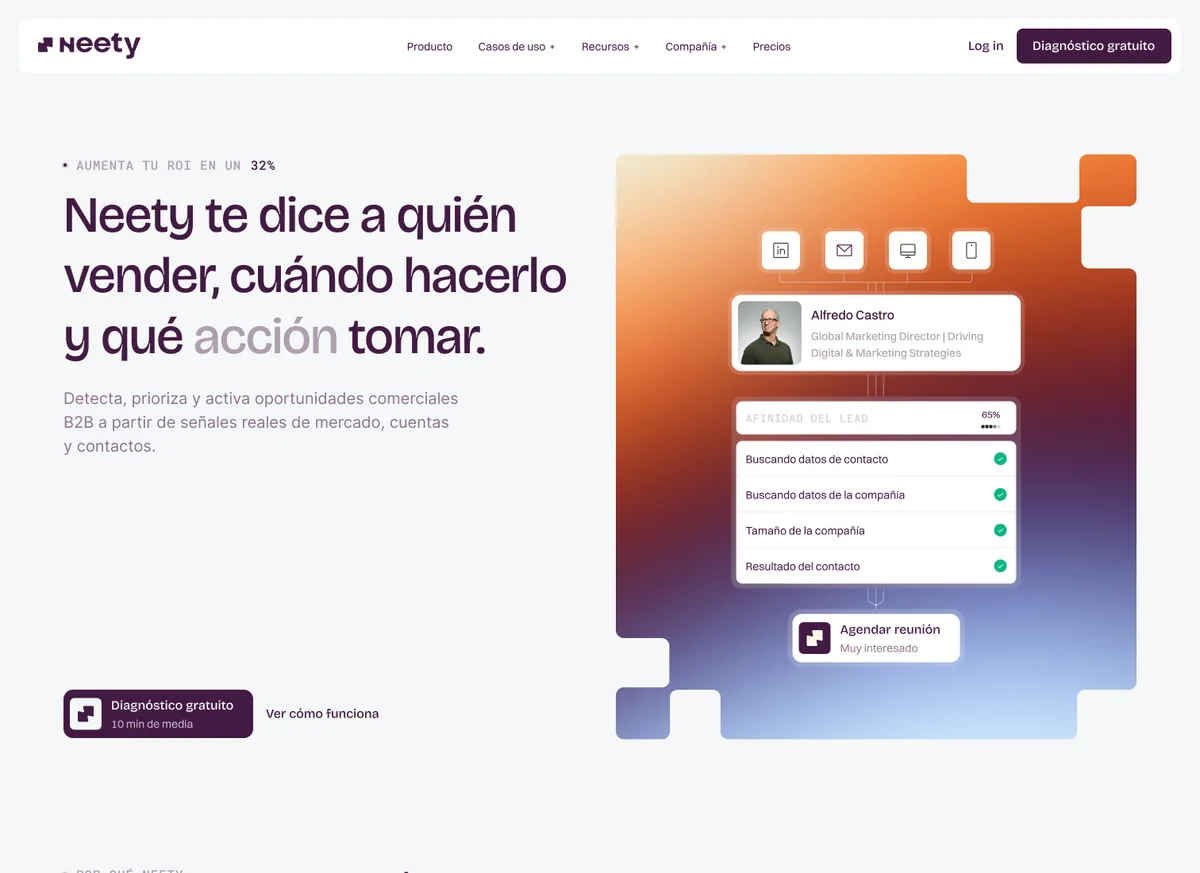
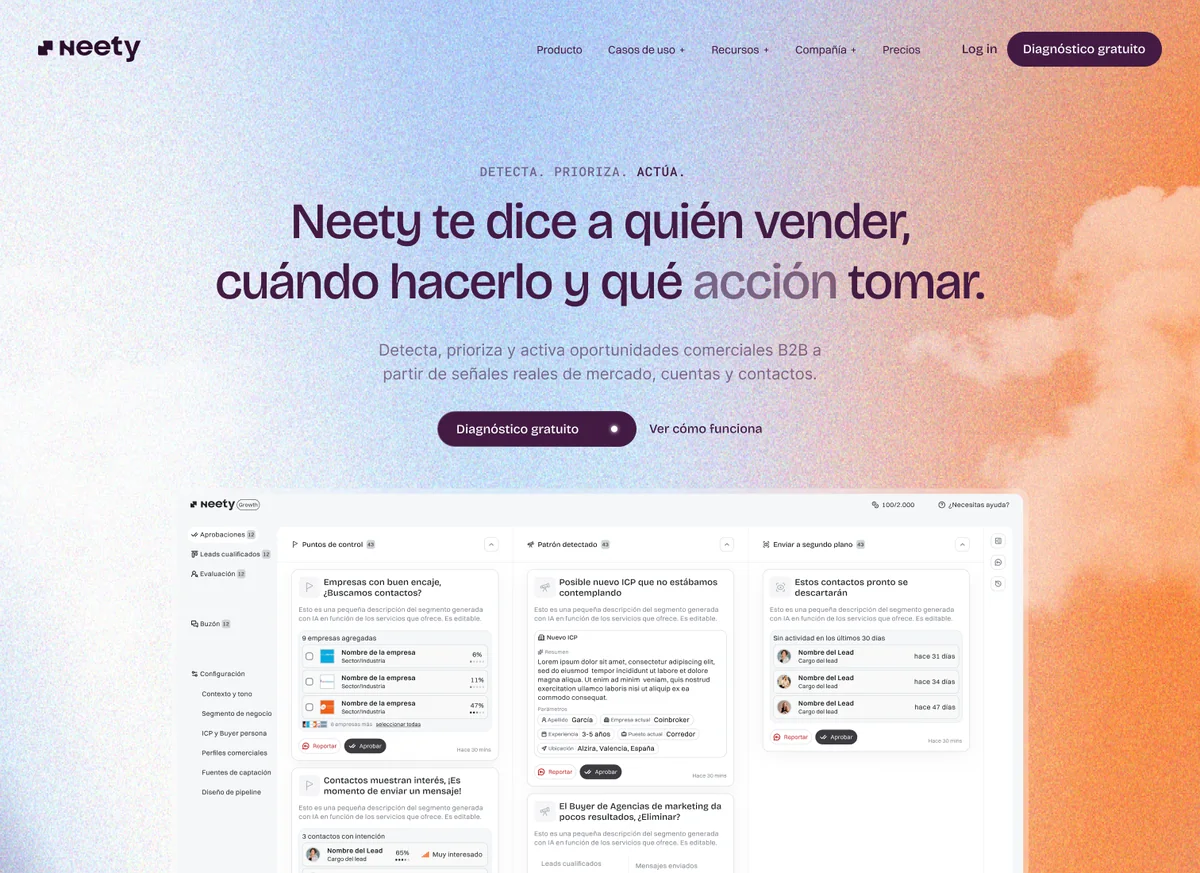
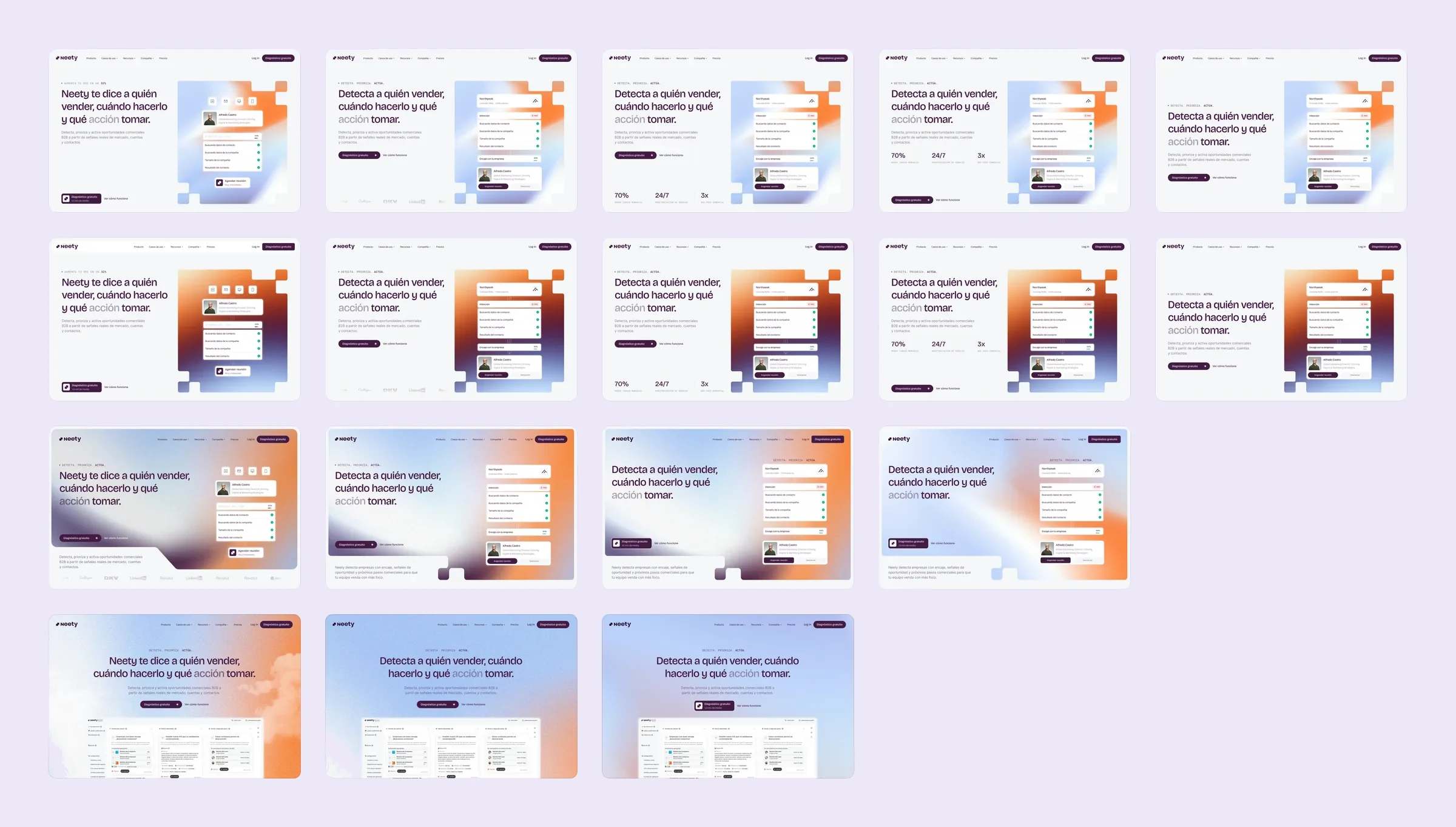
Colour
The palette of Neety, by how much it is used on the delivered site. Hover over a colour.
Usage measured on recordings of the delivered site: every pixel counts towards the nearest colour; photos and gradients aside.
Typography
Measured on the delivered site, at 1440 px. Headings shown scaled down.
- H1 · XLWho to sell to64 → 112 px
- H1 · LWho to sell to48 → 80 px
- H1 · MWho to sell to40 → 64 px
- H2Who to sell to32 → 48 px
- H3Who to sell to24 → 40 px
- LargeWho to sell to20 → 24 px
- MediumIt isn’t another tool for sending more messages.18 → 20 px
- RegularIt isn’t another tool for sending more messages.16 px
- SmallIt isn’t another tool for sending more messages.14 px
- TinyIt isn’t another tool for sending more messages.12 px
- DetailDetect. Prioritise. Act.12 px
Spacing
- Base step
- 4 px
- Between sections
- 112 px
- Container
- 1320 px
- 4padding, 80 times
- 6gap, 49 times
- 8padding, 157 times
- 12gap, 230 times
- 16padding, 140 times
- 20padding, 63 times
- 24padding, 72 times
- 32padding, 40 times
- 40padding, 41 times
The paddings, margins and gaps that repeat most on the delivered site, at 1440 px and true scale. Almost all fall on 4 px steps.
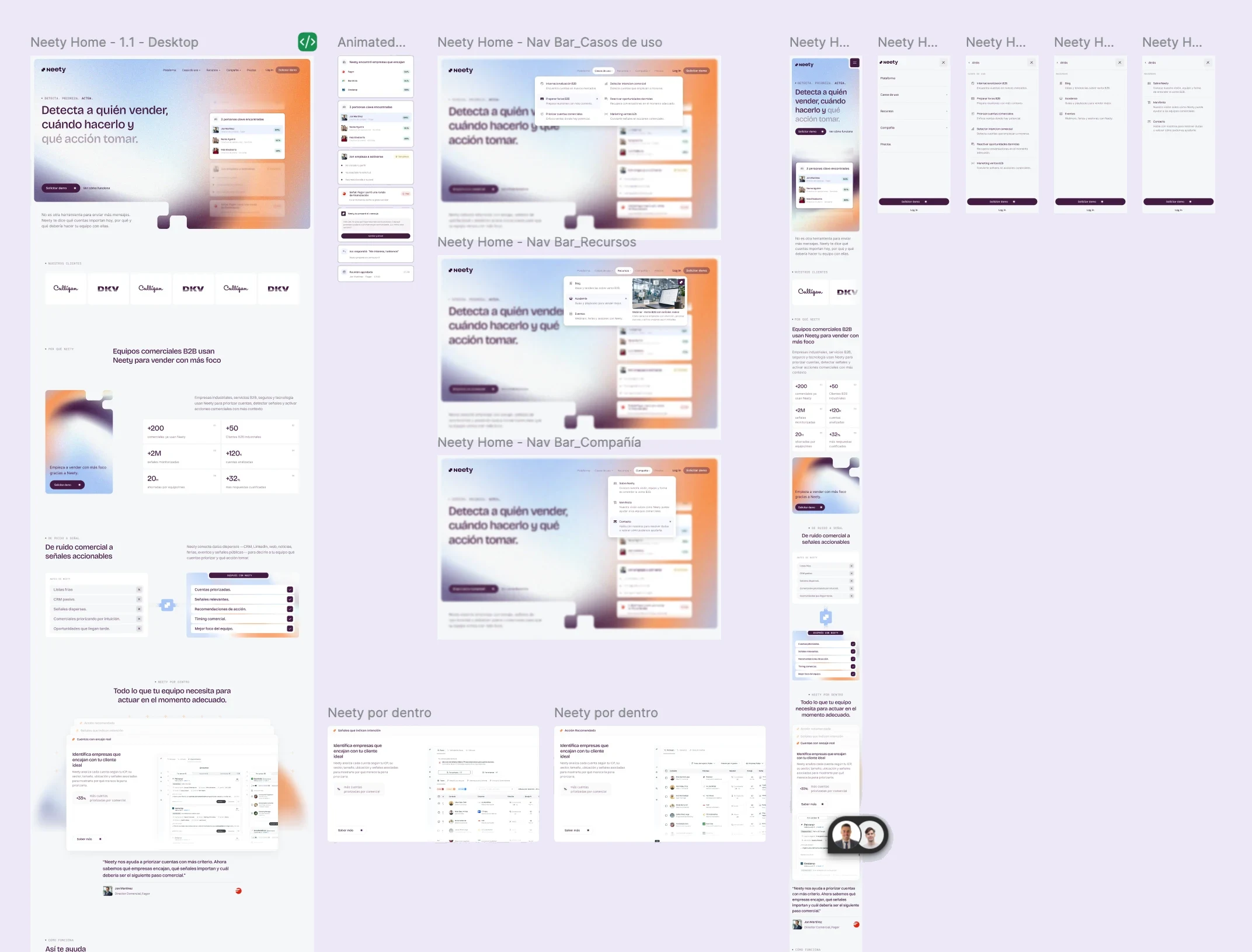
From design to motion
First we drew each card by hand in Figma, then animated them directly in code with Claude Code. Now Neety’s team can change their copy and images by talking to AI.
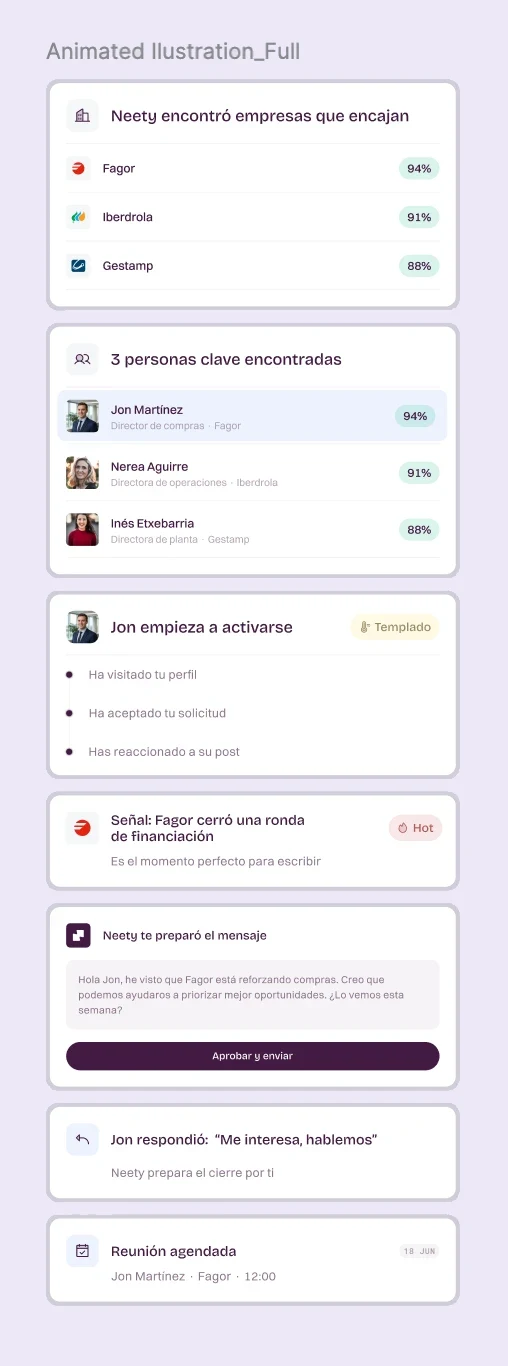
Micro-animations
Because it is built in code, every detail can be animated: a line, a step, a card. In “How Neety works”, the line moves forward and lights up each step with its screen.
Ship Studio and Agentation
The site was built in Ship Studio. Claude works on the code while the site shows live on the canvas. And with Agentation, feedback is left on the site itself, pointing at each element, so Claude knows exactly what to change.
The handover
Along with the site, Neety took its library: the guardrails for evolving it with AI. Every decision on design, motion or components is captured in it, along with the guide to connecting the repository to Claude or Ship Studio.
Under the hood
Tools
- Next.js
- Tailwind CSS
- GSAP + ScrollTrigger
- Sanity
- Cloudflare
- GitHub


In numbers
- 40 pages in two languages
- 209 written decisions
- 80 components in the library
Conclusion
Neety was our first project with agentic development. The design started in Figma. We built the code with AI, true to every decision in that design.
Neety took away a website connected to AI, which their team keeps evolving on their own.
That works because the library acts as guardrails. Colour, typography, motion and the 80 components are all captured in it.
And their team received a repository connected to Claude, from which they change content, sections or pages just by talking.